

Preserving Our Past, Sharing Our Stories, Shaping Our Future.
The Society meets the 4th Tuesday of each month at 7pm from April -October
The Banks Township Historical Building, located next to the Township Hall, will be closed October 29, 2026 until April of 2027
Visitors are welcome to stop in, explore local history, and learn more about the people, families, and communities that helped shape Banks Township.
Contact Information during off season
Louise Alfred: 231-676-3234
Jean Alward: 231-676-9995
Mailing Address
Banks Township Historical Society
6518 Center Street
Ellsworth, Michigan 49729
bankstownshiphistoricalsociety@gmail.com
Mark Your Calendar!
Our last meeting of 2026 will be held on Tuesday, October 27, at 7:00 p.m.
We hope to see you there!
Help Preserve the History of Banks Township!
Do you have an old photograph of Ellsworth, Atwood, or another part of Banks Township? Do you have a story to share about your family, a former school, a local business, a farm, a church, or a community event?
The Banks Township Historical Society (BTHS) welcomes photographs, documents, stories, and memories that help preserve and expand the history of our community.
Every photograph, document, and personal recollection helps future generations learn about the people, places, and events that shaped Banks Township.
Share Your Family’s Story!
We are looking for individuals who would be willing to share their family’s history in Banks Township through a presentation at a BTHS meeting during our 2027 season.
Your family’s story is an important part of our community’s history, and we would love to hear it!
Interested in sharing? Please contact Louise or Jean for more information.
Help us keep the history of Banks Township alive for generations to come!
Featured Article by Louise Alfred
A Brief History of Banks Township
Settlement by Europeans in the southern part of Michigan began in the early 1700’s. As more Europeans came into the state, they gradually moved northward, seeking property and a way to support themselves and their families. They found the north was one huge dense forest, entirely inhabited exclusively by native Americans. By the mid 1800’s the northwest section of Michigan was beginning to see an influx of some of these Europeans. Then the Civil War happened. The Homestead Act of 1862 was enacted which allowed adult citizens who had never borne arms against the U.S. to claim 160 acres of surveyed public land for a small fee and five years of continuous residence . Union soldiers could deduct their military service time from the residency requirement, making it easier for them to meet the conditions, and so they came.
Banks Township, is located in the northwest section of Antrim County, which is in the northwest section of Michigan’s lower peninsula. The original inhabitants of the area were native Americans known as the Anishnabeg. Settlement by Europeans into Banks Township was gradual, beginning around 1859 or 1860 in Antrim City, which was located along the shore of Lake Michigan. Land was cleared and homesteads established. Homesteaders used the timber cleared from their land to build their cabins and much of their furniture. The township was officially organized by the Michigan Legislature on March 11, 1863.
The lumbering industry prospered in early Banks Township with the building of saw mills throughout the township. In 1867, the firm of Wood, Pearl & Co. in Antrim City built a pier out into the bay for shipping timber to other ports along Lake Michigan. Many of the homesteaders worked in these sawmills. Many sawmills continued until around 1900, although the mill in Antrim City, as well as the community of Antrim City failed. It was discovered that the bay at Antrim City, was too shallow for the docking of large ships.
The soil in Banks Township proved to be very fertile and good for growing crops, especially fruit trees. More settlers came and eventually moved inland from Lake Michigan. The village of Atwood, two miles east of Lake Michigan, had its origins when Richard Knight homesteaded there in 1862. Atwood was started as a lumber camp and post office. The village did pretty well for a brief time, incorporating a flour mill, general store, three churches, schoolhouse, and several other stores. As the timber depleted, so did Atwood's population, and by 1905 the residency was down to 75 people.
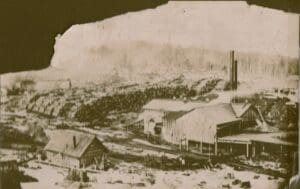
Word spread about this good land in Banks Township via letters to relatives and friends back East, and people came. Many new homesteads were established throughout the township. In 1866, Lois Hardy accidentally discovered the area that was to become Ellsworth while taking a walk through the forest. In 1870 she secured the land and built a cabin in the center of what was to become the village of Ellsworth. Several settlers gradually secured property in and around this fertile, forested area. Early entrepreneurs built sawmills to accommodate the growing lumber industry. Sawmills were being built at several locations throughout Banks Township.
One such sawmill was built in 1881 by Augustus Davis and his nephew Erwin A. Dean at the mouth of Orr Creek (now Skinner Creek) where it emptied into Intermediate Lake (now Ellsworth Lake). At the time the area was called Ox Bow because an oxbow wetland is a meander of a stream, river or creek, that has become separated from the flow of water and stores excess water. Another sawmill was built a little further up the creek by Russell T. Sleeper in an area known as Needmore.
By 1882, Dodatus O. Parks owned most of the property north of the present day Center Street, and Falle H Skow owned the property south of this line. Frederick Meech also owned some land north of Center Street. Skow, being a wise entrepreneur, realized that this was a desirable location so he encouraged Parks and Meech to have their land surveyed by Frederick L. Church. Church was hired and the streets and lots were plotted. People came and bought lots and then built homes and buildings for businesses. In 1884 Lewis DeLine, Augustus Davis, Erwin Dean, Sam Brown and Henry Brown entered a petition to the state of Michigan for a local post office. Mr. DeLine chose the name “Ellsworth” for this community, naming it after the colonel he served under in the Civil War. He was then appointed as the first postmaster of Ellsworth.
By 1891 the railroad was coming north from Grand Rapids, with plans to extend to the straits of Mackinaw. The proposed route went right through the village, thus allowing possible growth and business expansion. This opened the door to the tourism industry. Along with fertile land, the area lakes proved to be stocked with a variety of fish, thus enticing fishermen from the southern part of Michigan to come north. To accommodate these tourists, two hotels were built, the Columbia and the Orient Hotels. By 1892 the town had 25 residences with 30 families living in them. Some of the early businesses included general stores, a livery stable, blacksmith shop, restaurants, a beer garden, and a boarding house, as well as, rooms to rent in some of the homes. There were also three churches in town.
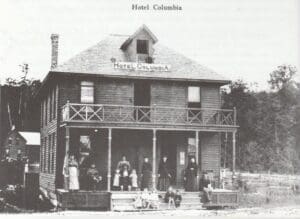
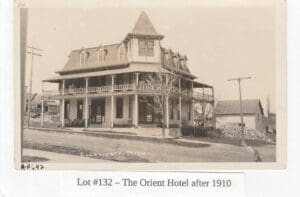
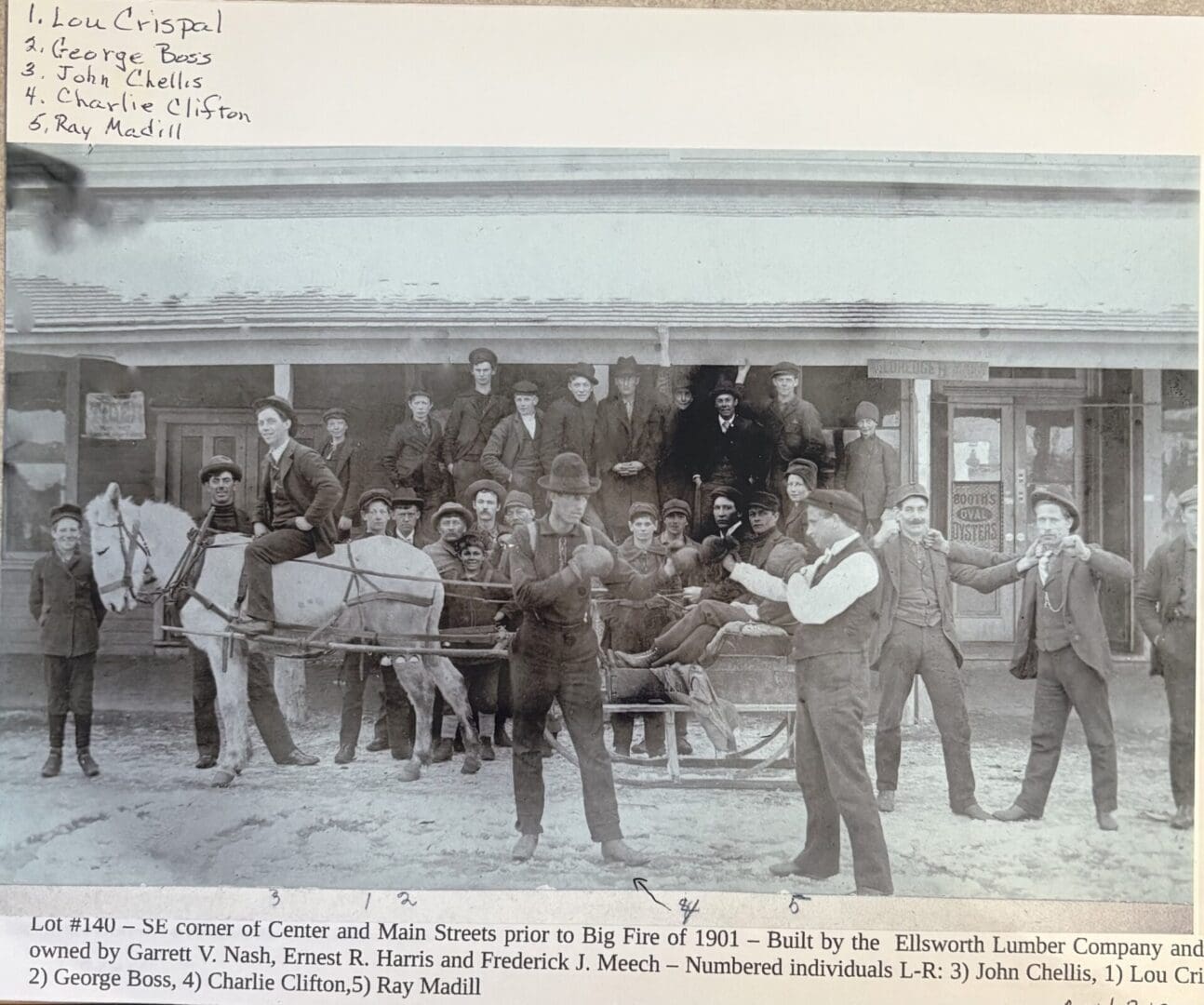
The “Big Fire” occurred on January 20, 1901. In this fire all of the businesses on the south side of Center Street, except the recently built Maccabees building, burned to the ground. Business owners quickly set to constructing new replacement buildings. Because agriculture was a staple of Banks Township, necessity demanded the formation of the Banks Township Marketing Association to warehouse their crops. The Ellsworth Canning plant was constructed in 1922, which purchased crops grown by local farmers. Ellsworth also boasted a Pickle Station. Other small business were established to accommodate the needs of the growing community. In 1938 the village of Ellsworth was incorporated.
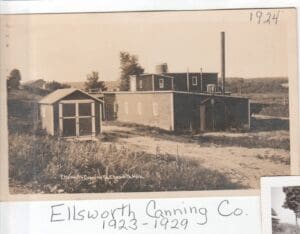
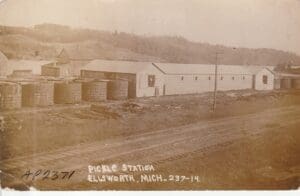
The railroad offered another opportunity for growth in Banks Township. In 1999 the Central Lake Lumber Company built a railroad spur to a valley located a little south and east of the center of Banks Township. This became the short lived sawmill town of Essex. It only existed until 1904. During this short span of time they had two sawmills, a shingle mill, a stave factory, a large boarding house, about 40 houses, a general store, a post office, a telephone office, a blacksmith shop, a livery stable, a school, and a shoe shop. They had advertised in Grand Rapids papers for help and many people of Dutch ancestry responded to the call. Many of these laborers brought their families and then purchased land in Banks Township.
Today we are still a small community in a beautiful and peaceful setting. We have three churches within the township, several volunteer ministries, a pallet mill, an excavating contractor, and numerous independent businesses.
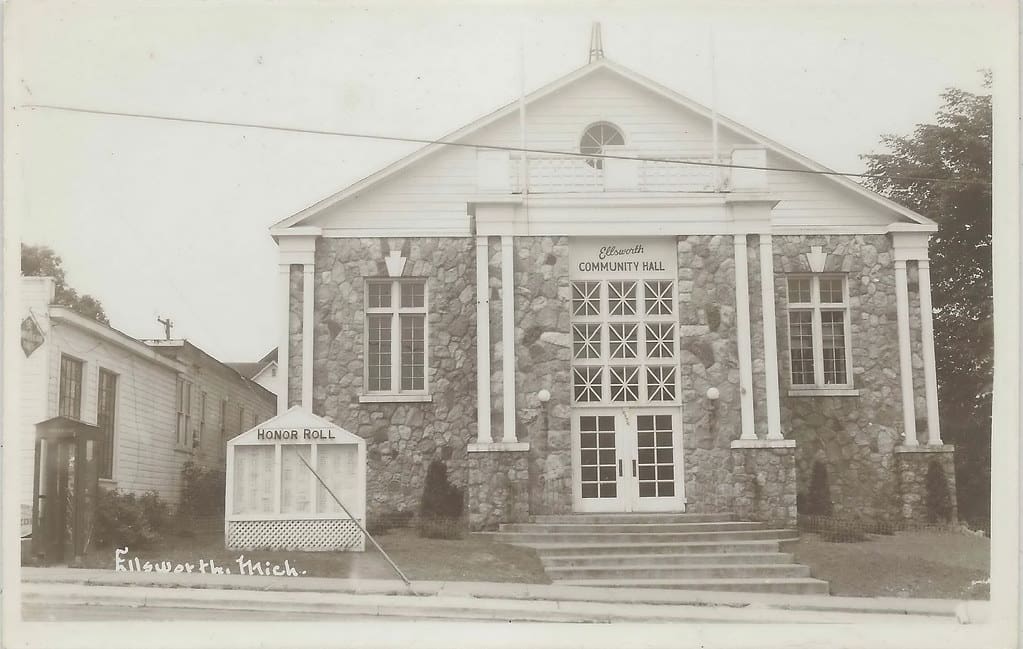
Banks Township Hall in the 1940's
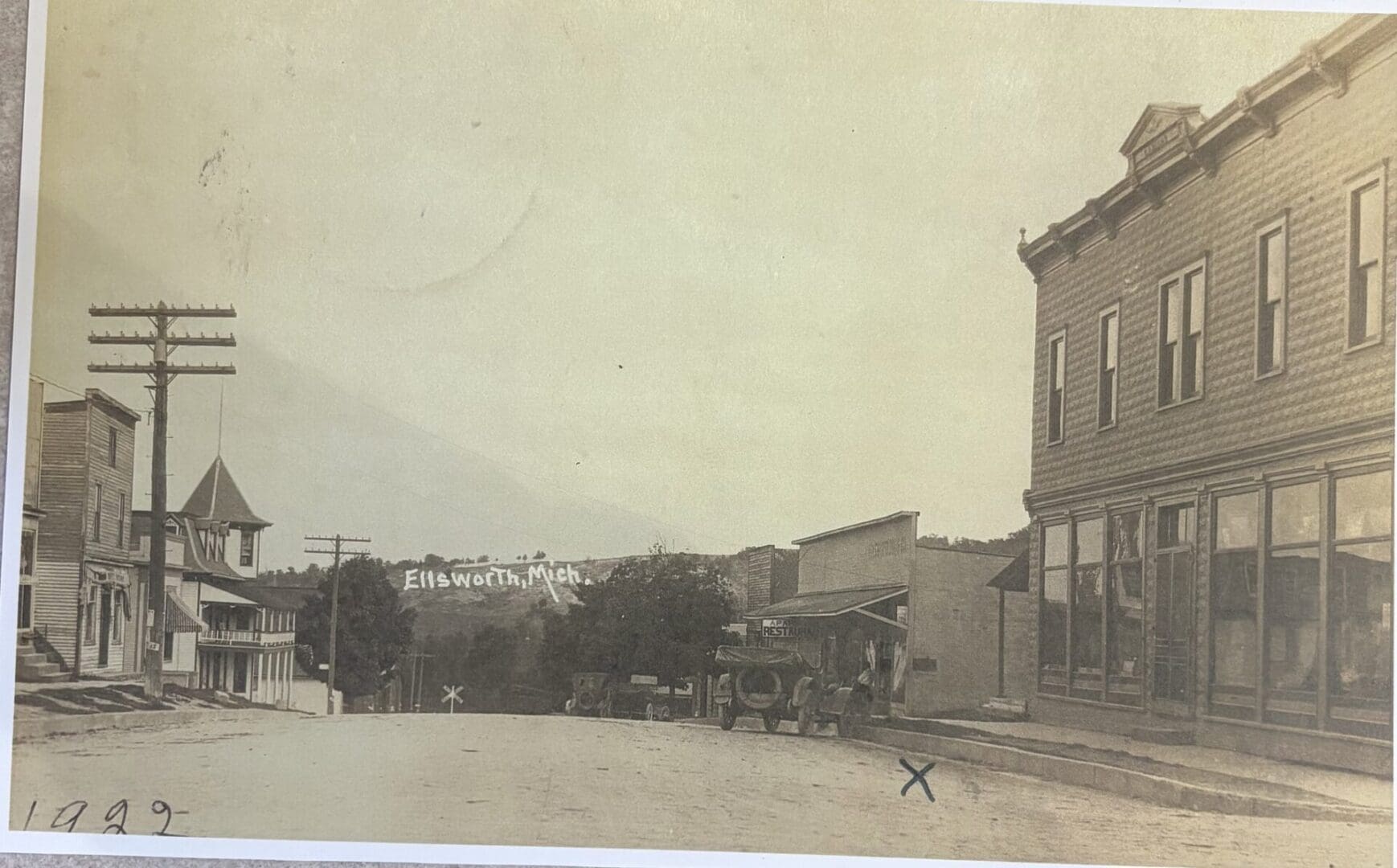
1922 View of Ellsworth from the 4 corners
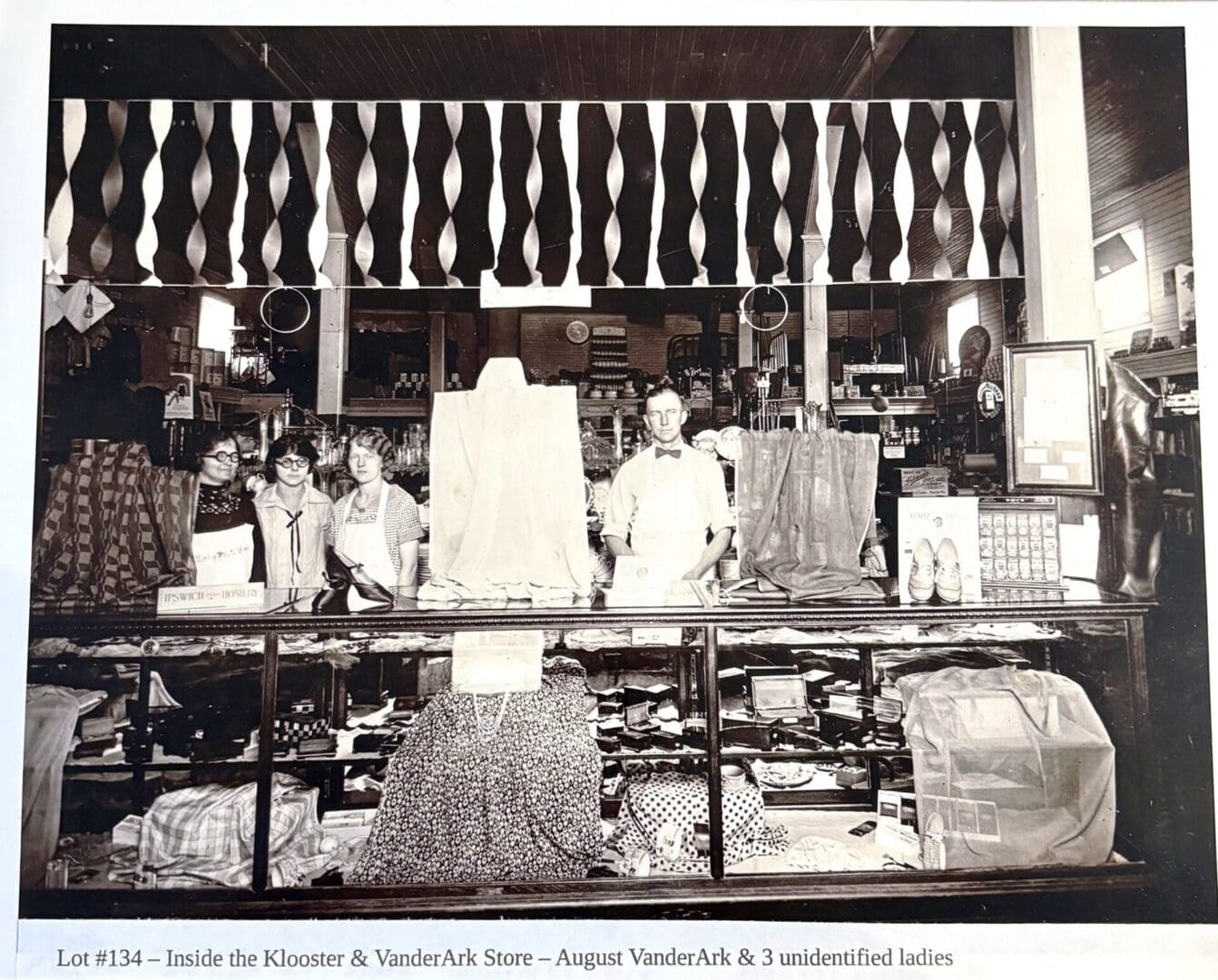
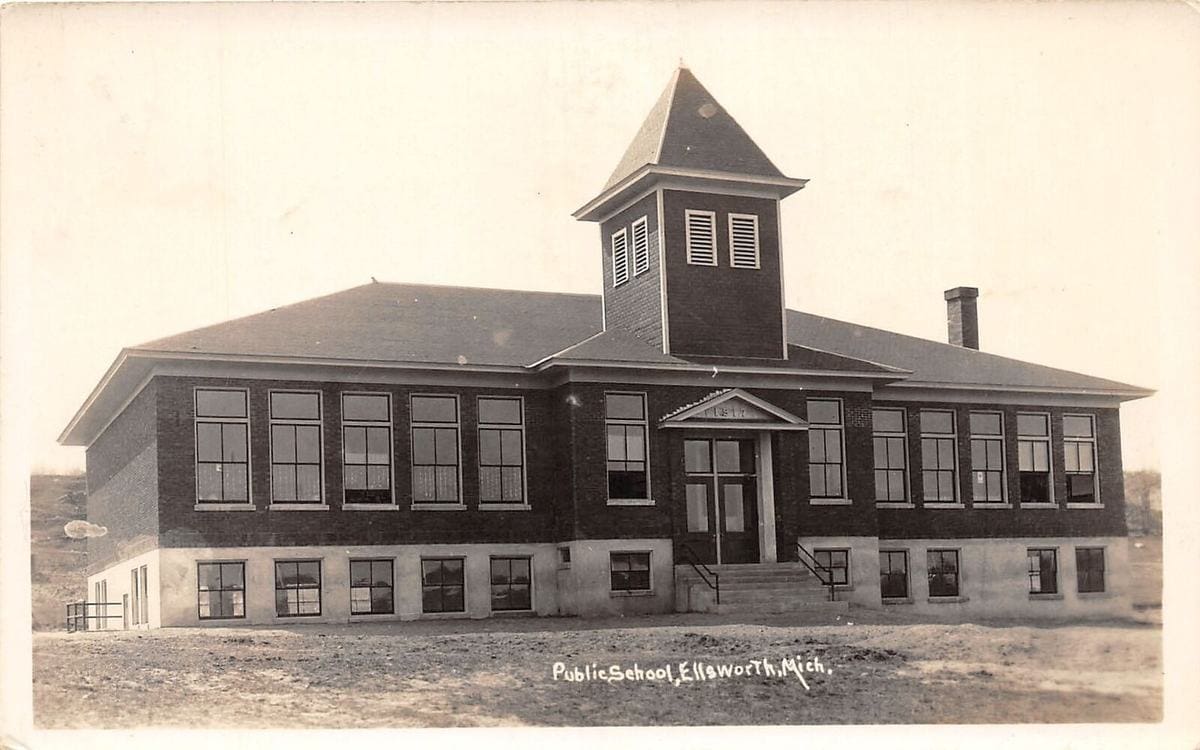
Ellsworth Public School 1930's
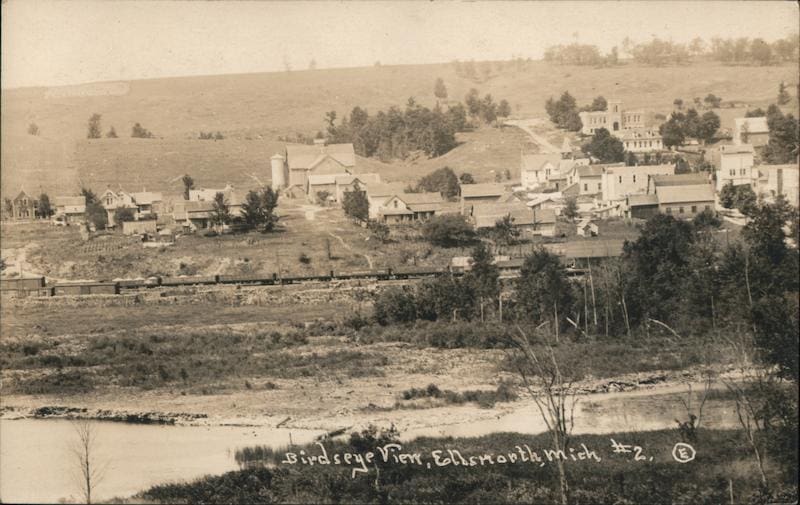
Birds eye view of Ellsworth
Banks Township Historical Society Through the Years
The Banks Township Historical Society has played an important role in preserving the history of Ellsworth and the surrounding communities of Banks Township. For decades, volunteers have worked to collect local stories, photographs, documents, artifacts, and memories that might otherwise have been lost.
The Society's work has taken many forms over the years. Members have organized historical programs, welcomed visitors to the Historical Building, participated in community celebrations, and helped raise funds to support the preservation of local history. The Society has also been involved in efforts to recognize and preserve important places and stories through historical markers and other projects.
Preserving the Stories of Local People
Some of the most valuable history is found in the memories of the people who lived it.
Members of the Historical Society have collected personal recollections about life in Banks Township, including stories about farming, schools, businesses, families, transportation, and everyday life in Ellsworth and the surrounding rural communities.
One example is Country School Days, an account of rural school life written for the Banks Township Historical Society by longtime teacher Wilma Bolhuis. Her recollections describe a time when country-school students of different ages learned together and teachers were responsible for much more than teaching lessons. These firsthand accounts provide a personal connection to a way of life that is no longer familiar to many residents.
The Society has also preserved photographs and other materials that help document the people and places of Banks Township. These collections complement published histories such as Elsie Timmer's Gleanings from Ellsworth's Yesteryears and Grace Hooper's Pioneer Notes.
Community Involvement
The Historical Society has long been part of the community beyond its work with historical records. In the 1990s, Society members participated in the Ellsworth Pig Roast, operated booths and floats, conducted membership and fundraising efforts, and worked toward projects such as state historical markers. Volunteers were recognized for their contributions to preserving local history and supporting the Society's work.
The Society has also hosted meetings and historical programs featuring local stories and residents with firsthand knowledge of earlier generations. A 1994 program, for example, featured stories about rural life around Ellsworth during the 1930s and 1940s, giving listeners a glimpse into a very different time in the community's history.
Preserving Places as Well as Stories
Preserving history also means caring for the buildings and places that help tell the story of the community. The Society has been involved with the preservation of the Little Stone House, an important local historic property. Community members have volunteered their time to care for the property and help preserve it for future generations.
The Historical Society's work continues to depend on volunteers and on the generosity of people who believe that local history is worth preserving. The Society is a reminder that history is not only found in books and official records—it is also found in old photographs, family stories, school memories, buildings, maps, and the recollections of people who remember how the community once was.
The Early Years
Banks Township is located in northern Antrim County, along the eastern shore of Grand Traverse Bay. The township's history is closely connected to the development of Antrim County and to the early communities that grew from the area's forests, waterways, farms, and roads.
On March 11, 1863, the Michigan Legislature officially organized Banks Township as part of the same act that separated Antrim County from Grand Traverse County. The first Banks Township meeting was scheduled to be held at the home of Gurdon Geer. Just a few weeks later, on April 6, 1863, Antrim County held its first election, with only 66 votes cast countywide. These events marked the beginning of local government in a region that was still largely covered by wilderness.
The Village of Ellsworth
Before it was known as Ellsworth, the village was called Ox Bow, while the area farther south was known as Needsmore. As the community developed, the name Ellsworth was chosen by Louis DeLine in honor of Colonel Elmer E. Ellsworth, his commanding officer during the Civil War. Colonel Ellsworth, a close friend of Abraham Lincoln, was killed early in the conflict, and DeLine chose to honor his memory by naming the community after him.
This historic photograph of Ellsworth, taken between 1895 and 1912, provides a glimpse into the community during its early years. It features the first Ellsworth School on High Street, along with the New Orient Hotel and a large store with a basement used for storing potatoes.
The development of Ellsworth was part of a larger pattern of settlement throughout Banks Township. Early communities grew along waterways, roads, and areas where lumbering and agriculture provided opportunities for families and businesses.
Lumbering, Farming, and the Land
The landscape of Banks Township played an important role in its early settlement. Grand Traverse Bay formed the township's western boundary, while lakes and streams—including Six Mile Lake, St. Clair Lake, Ellsworth Lake, and Wilson Lake—provided water, fishing, transportation routes, and other resources for early residents.
The heavily forested land was initially attractive to lumbermen. As the forests were harvested, cleared land was gradually converted to farms, shaping much of the agricultural landscape that remains familiar today. Streams also provided opportunities for early mills, including lumber and grist mills.
By the late 1800s, other natural resources were being developed as well. Shale deposits near Ellsworth were being mined, and gravel extraction later became another part of the township's history.
Schools, Roads, and Early Communities
A 1910 plat map provides an interesting picture of Banks Township at the time. It shows the locations of schools, churches, property owners, and roads that connected the scattered communities and farms across the township's hilly terrain.
Among the roads shown on early maps were Essex Road at Peebles Road and the Ellsworth-Atwood Road, which bypassed Bentley Hill by way of Friske Road and near the Doctor School. Many of the family names found on these early maps are still remembered by longtime residents and remain part of the story of Banks Township.
Schools were an important part of community life. Elsie Timmer's Gleanings from Ellsworth's Yesteryears provides detailed accounts and stories about the schools that served the families of Banks Township.
Remembering Our History
The history of Banks Township is more than a collection of dates and names. It is the story of the families who cleared the land, built homes and farms, established schools and churches, operated businesses, traveled the early roads, and helped build the communities we know today.
Two important historical references for Banks Township are Elsie Timmer's Gleanings from Ellsworth's Yesteryears (Petoskey, MI, Review Printing Company, Inc., circa 1966) and Grace Hooper's Pioneer Notes (Elk Rapids, MI, Fen's Rim Publications, 1993). Additional information and stories have come from personal recollections shared by members of the Banks Township Historical Society.
For those interested in exploring the broader history of our area, the Antrim County MIGenWeb website contains a wealth of historical and genealogical information about communities throughout Antrim County, including historical maps, township records, photographs, newspapers, census information, cemeteries, and histories of the county's towns and townships. Explore Antrim County History and Genealogy
Gleanings
by Elsie Timmer
A FOREWORD TO THE READER
This history is dedicated to the former residents of Ellsworth.
. . .To those who lived here when this village was Young.
. . .And from their keen memory we learned how our pioneers strived to conquer the forest and wilderness.
. . .To make a home, and eke out a livelihood for their families.
This is written in appreciation for the many fine friendships acquired during my life here.
Especially do I want to mention the assistance of Mrs. Margaret Skow Clow; Mrs. Kittie Eastcott Black McPherson; Mrs. Hazel De Line McPhee;. Mrs. Grace Harroun McElroy; W.P. Smith; and the late Mr. and Mrs. Eugene Best; Tracy Boss; Arthur Ruis; Mrs. Mary Dean Moblo; also Jud Hardy.
As well as many others who gave freely of their time in suppling me with information.
These pages of the past are written to keep alive the heritage that is ours. Left to us by our forefathers who pioneered the forests we now call our home – The Village of Ellsworth.